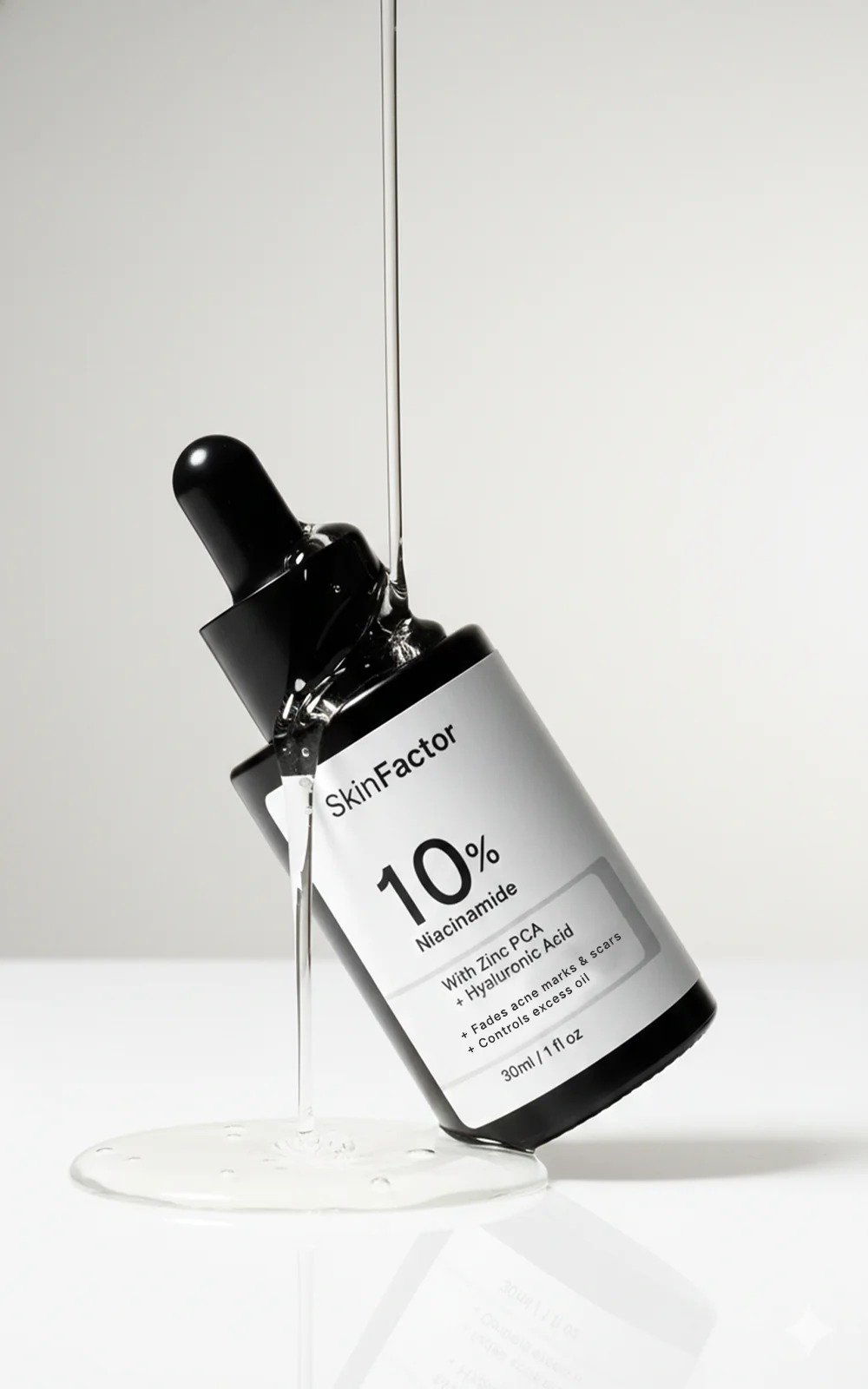
Niacinamide has quietly become one of the most trusted names in skincare, and for good reason. Gentle enough for daily use yet powerful enough to address multiple skin concerns at once, this vitamin-derived ingredient has earned its place in routines ranging from minimalist to elaborate. A Niacinamide Serum when formulated well, can help even out tone, calm redness, minimize the look of pores, and support the skin’s natural barrier — all without the irritation that stronger actives sometimes bring. Here’s a complete look at what makes a niacinamide serum worth adding to your routine, and how to get the most from it.
What Is Niacinamide, Exactly?
Niacinamide is a form of vitamin B3, a water-soluble nutrient that plays a role in cellular energy production and repair throughout the body. In topical skincare, it’s valued for its versatility. Unlike single-purpose ingredients that target one issue, niacinamide works on several fronts simultaneously: it helps regulate oil production, supports the skin’s protective barrier, and has a calming effect on visible redness and irritation. This broad usefulness is why dermatologists frequently recommend it as a foundational ingredient, suitable for nearly every skin type, including sensitive and acne-prone skin.
The Core Benefits of a Niacinamide Serum
Balanced oil and refined pores. One of niacinamide’s most cited effects is its ability to help regulate sebum production. For those with oily or combination skin, this can translate to a less shiny complexion and pores that appear smaller over time, since excess oil often exaggerates their appearance.
More even skin tone. Niacinamide can help fade the look of dark spots and post-acne marks by interrupting the transfer of pigment to the skin’s surface layer. With consistent use, many people notice a gradual brightening and a more uniform complexion.
A stronger skin barrier. The outermost layer of skin, the barrier, is responsible for locking in moisture and keeping irritants out. Niacinamide has been shown to boost the production of ceramides, lipids that make up a healthy barrier. A stronger barrier means better hydration retention and more resilience against environmental stressors.
Calmer, less reactive skin. Because of its anti-inflammatory properties, niacinamide is often recommended for those dealing with redness, sensitivity, or conditions like rosacea. It soothes without the sting that some active ingredients cause.
Fine line support. While not a replacement for retinol, niacinamide contributes to a smoother-looking texture over time by supporting collagen production and improving the skin’s overall resilience.
What to Look for in a Niacinamide Serum
Not all niacinamide serums are created equal. A few formulation details make a meaningful difference:
Concentration matters, but more isn’t always better. Most effective formulas sit between 2% and 10%. Higher concentrations aren’t necessarily superior and can sometimes cause temporary flushing or irritation, particularly for those with sensitive skin.
Supporting ingredients count. Niacinamide pairs well with hyaluronic acid for hydration, zinc for oil control, and peptides for added skin-supportive benefits. A well-rounded serum often includes complementary ingredients rather than niacinamide alone.
Stable, well-preserved formulas. Niacinamide is generally stable, but a good serum should be packaged to protect it from degradation, typically in opaque or UV-protective bottles.
Fragrance-free options are worth prioritizing if you have reactive or sensitive skin, since fragrance is one of the more common irritants in skincare.
How to Use Niacinamide Serum Effectively
Cleanse first. Apply Serum to clean, slightly damp skin so it absorbs efficiently.
Apply a few drops. A little goes a long way — most serums only require two to three drops for the full face.
Layer thoughtfully. Niacinamide works well both morning and night. In the morning, follow with moisturizer and sunscreen. At night, it pairs nicely with hydrating or repair-focused products.
Be patient. Visible improvements in tone and texture typically take four to eight weeks of consistent use. Skincare works cumulatively, not overnight.
Watch for interactions. While niacinamide is compatible with most ingredients, some people prefer to separate it from pure vitamin C formulations by using one in the morning and the other at night, simply to avoid any minor pH-related sensitivity, even though modern formulations have largely resolved earlier concerns about the two conflicting.
See also: Curtain Cleaning Dubai for a Cleaner Home and Healthier Indoor Environment
Who Should Use It?
Almost everyone can benefit from niacinamide, which is part of why it has become such a staple. It’s particularly well-suited for:
Oily and acne-prone skin looking to manage shine and marks
Sensitive skin that reacts poorly to stronger actives
Mature skin seeking barrier support and improved texture
Anyone dealing with uneven tone or occasional redness
A Simple Addition With Real Payoff
What makes a niacinamide serum appealing isn’t a single dramatic transformation — it’s the steady, cumulative improvement across several fronts at once: tone, texture, oil balance, and resilience. For those looking to simplify a routine without sacrificing results, a well-formulated niacinamide serum offers a rare combination of gentleness and effectiveness.
As with any new product, patch testing before full application is a smart first step, and pairing your serum with daily sunscreen will help protect and preserve the results you’re working toward. Clear, healthy, radiant skin isn’t about doing more — often, it’s about doing the right things consistently, and niacinamide is one of skincare’s most consistent performers.