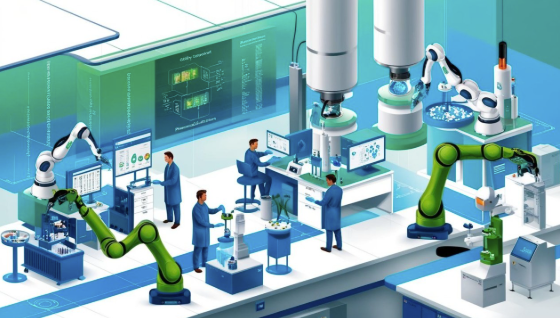
The integration of artificial intelligence into business operations marks a significant shift in how organizations function. Smart automation enhances efficiency and accuracy, while also reducing labor costs. However, this transformation is not without its challenges, particularly in areas like data privacy and workforce dynamics. As businesses grapple with these complexities, understanding the balance between technology and human roles becomes critical. What strategies will emerge to ensure a harmonious coexistence in this evolving landscape?
How AI Is Transforming Business Operations
As businesses increasingly integrate technology into their operations, the transformative impact of artificial intelligence (AI) has become evident across various sectors.
AI facilitates process optimization by streamlining workflows, reducing inefficiencies, and enhancing productivity. Moreover, it provides decision support through data analysis, enabling leaders to make informed choices.
This shift towards intelligent systems empowers organizations to adapt swiftly in a competitive landscape, fostering greater operational freedom.
Key Benefits of Smart Automation for Organizations
Smart automation offers organizations a multitude of advantages that enhance operational efficiency and innovation.
It facilitates cost savings by reducing labor expenses while delivering increased efficiency through streamlined processes.
Enhanced accuracy minimizes errors, leading to better decision-making.
Furthermore, improved scalability allows organizations to adapt swiftly to changing demands, ensuring they remain competitive in a dynamic market environment and fostering a sense of freedom in operational capabilities.
See also: zlomecom
Challenges and Considerations in Implementing AI Solutions
While the potential of AI solutions is immense, organizations must navigate a complex landscape of challenges and considerations during implementation.
Key issues include data privacy and ethical concerns, which can undermine trust.
Additionally, integration hurdles and scalability issues often arise, while workforce displacement may create resistance.
Effective training requirements are essential to ensure that employees adapt, maximizing the benefits of AI technologies.
The Future of Work: Human-Machine Collaboration
The evolving landscape of work increasingly highlights the importance of human-machine collaboration, particularly in light of the challenges faced during AI implementation.
Organizations are cultivating a collaborative workforce, where adaptive technologies enhance human capabilities rather than replace them. This symbiotic relationship fosters innovation, efficiency, and job satisfaction, empowering individuals to harness their creativity while optimizing productivity through intelligent systems.
Conclusion
The convergence of AI and smart automation is reshaping the landscape of business operations, offering unprecedented efficiency and cost-effectiveness. Yet, as companies embrace these advancements, they must also confront the stark reality of workforce displacement and data privacy concerns. Interestingly, the success of this transformation may hinge not solely on technological adoption but on the serendipitous synergy between humans and machines, illustrating that the future of work may ultimately depend on collaboration rather than competition.